
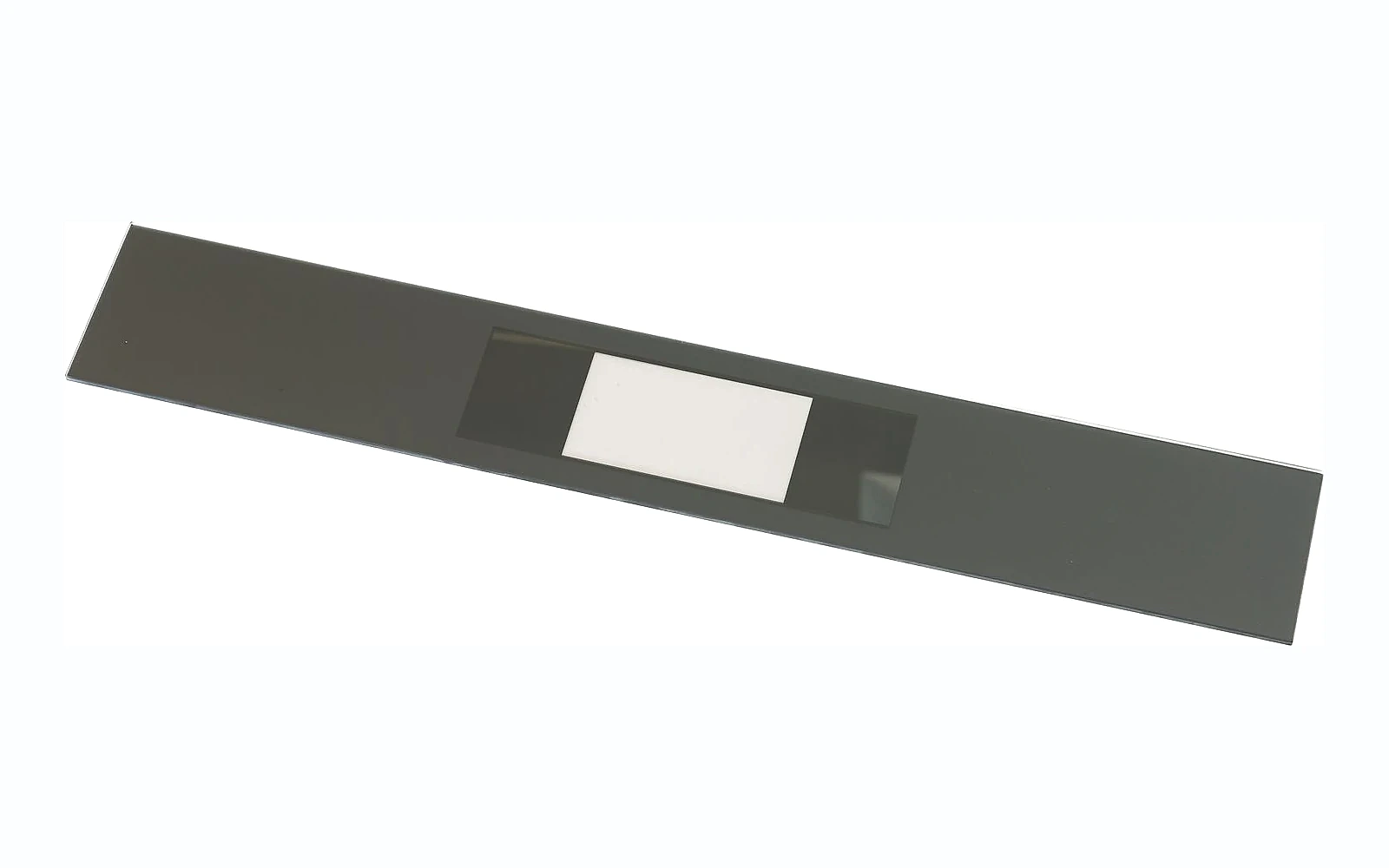

Quick answer: AG diffuses reflections; AR reduces reflection by optical interference
Anti-glare (AG) glass uses a textured or diffusing surface to spread reflected light so bright images are less distinct. Anti-reflective (AR) glass uses one or more optical coating layers to reduce reflected light at selected wavelengths and angles. Clear uncoated glass usually offers the lowest complexity and strong image sharpness but reflects more ambient light. The right choice depends on display brightness, ambient lighting, viewing angle, required contrast, permitted haze and sparkle, cleaning chemicals, touch function, cost and process sequence.
Do not choose a surface from a marketing label alone. Build prototypes with the production display, adhesive, printed mask and enclosure; measure reflectance/transmittance/haze as applicable; inspect powered readability; and validate abrasion, chemical cleaning, fingerprints and environmental exposure. A coating value from a flat coupon is not automatically the performance of the finished decorated panel.
The three baseline options
| Surface | Main optical action | Typical advantage | Main trade-off |
|---|---|---|---|
| Clear uncoated | Specular transmission and reflection | Sharp image, simpler process | Strong mirror-like reflections |
| Anti-glare | Diffuses reflected and transmitted light | Reduces distinct glare images | Haze, sparkle and reduced clarity |
| Anti-reflective | Lowers reflection through interference coating | Higher apparent contrast and transmission | Coating cost, color shift and handling risk |
Some designs combine AG and AR, or add anti-fingerprint/oleophobic properties. Each additional surface treatment changes the optical and durability stack. The buyer should specify measured outcomes rather than assuming every “AG,” “AR” or “AF” treatment is equivalent.
How anti-glare surfaces work
AG treatment creates microscopic surface structure by controlled etching, coating or another texturing method. Instead of reflecting a lamp as a sharp image, the surface distributes the energy over a wider angle. This can improve perceived readability where a distinct ceiling light or window would otherwise obscure information.
The same diffusion can affect light coming from the display. Important parameters include:
- Haze: proportion of transmitted light scattered away from the primary beam;
- Clarity: ability to preserve fine image detail;
- Gloss: specular surface appearance at a defined geometry;
- Sparkle: grain-like luminance variation caused by interaction between surface texture and display pixels;
- Surface roughness: influences optical scattering, touch feel and soil retention.
More haze is not automatically better. A high-haze surface may suppress reflected images but wash out black levels, soften icons and increase sparkle on high-resolution displays. The optimum is application-specific.
How anti-reflective coatings work
AR coatings use thin layers with controlled refractive properties so reflected waves partially cancel. The effect depends on wavelength, incident angle, substrate, coating design and which surfaces are treated. SCHOTT technical literature for anti-reflective glass illustrates how coatings can reduce reflection and improve display contrast, particularly where ambient light would otherwise dominate.
AR performance should be described with:
- luminous or spectral reflectance;
- luminous or spectral transmittance;
- measurement side and coated surface count;
- wavelength range and illuminant;
- angle of incidence;
- reflected color and angular color shift;
- coating orientation in the final assembly.
A low normal-incidence reflectance number does not describe every user angle. A coating can show blue, violet, green or another residual reflection, especially at oblique angles. Evaluate whether that color is acceptable next to the appliance finish and printed border.
Translate the application into requirements
Indoor kitchen or laundry appliance
Lighting is usually artificial and viewing distance is short. Distinct ceiling-light reflections, fingerprints and cleaning durability may matter more than extreme solar readability. A modest AG surface, AR surface or bright display behind clear glass can each work depending on industrial design.
Outdoor EV-charger or public interface
Sunlight, polarized eyewear, wide temperature exposure, vandalism and frequent cleaning increase risk. Measure powered contrast across angles and environmental states. An AR coating can improve contrast, but the enclosure, display brightness, polarizers and air/adhesive interfaces also determine total reflection.
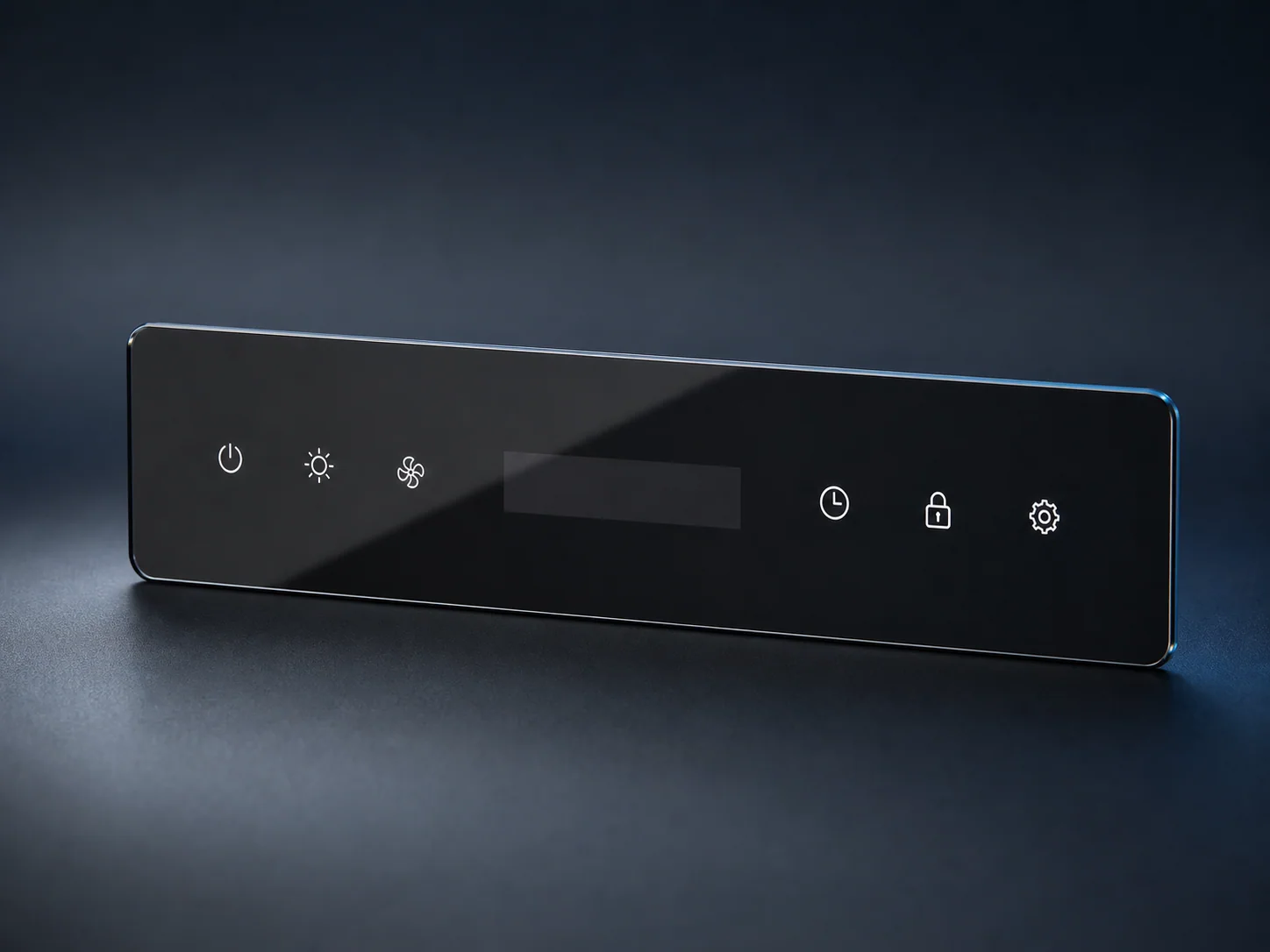
Dead-front black control panel
The powered-off panel must look uniformly black while the powered display remains readable. Surface haze, reflected color, printed-window transmission and backing color interact. Inspect both states; optimizing only the powered display may damage dead-front concealment.
Build an optical stack budget
List every interface from the user to the display:
- air-to-glass front surface;
- glass substrate absorption and tint;
- AG/AR/AF treatment;
- screen-printed display window or mask;
- air gap or optical adhesive;
- touch sensor or cover lens layers;
- display polarizer and module;
- internal reflections from housing and backlight.
Each air interface can reflect light. Optical bonding may reduce internal reflection compared with an air gap, but it adds adhesive, cleanliness and rework requirements. Printed translucent windows can dominate transmission and color even when the base glass has excellent specifications. Allocate targets to the assembled stack rather than asking the glass alone to solve every readability problem.
Specify measurable characteristics
| Characteristic | Why it matters | Specification notes |
|---|---|---|
| Luminous transmittance | Display brightness through glass | State illuminant, geometry and complete stack |
| Reflectance | Ambient-light contrast | State side, angle, wavelength/illuminant |
| Haze | Diffusion and image washout | State standard/method and sample condition |
| Clarity | Fine icon/text readability | Correlate method with powered display |
| Gloss | Surface appearance | Define angle and instrument |
| Sparkle | Pixel-level grain | Use production display, resolution and distance |
| Color shift | Brand and display color | Measure reflected/transmitted state as relevant |
| Surface energy | Bonding or coating compatibility | Define treated side and aging condition |
Do not copy a supplier datasheet limit without confirming glass thickness, coating side, printing, tempering and subsequent processing. Measurement methods and tolerances must be agreed before sample approval.
Manufacturing sequence matters
Surface treatment must be compatible with cutting, CNC processing, edge grinding, drilling, washing, tempering, screen printing, coating and bonding. Questions to resolve include:
- Is AG/AR applied before or after tempering?
- Can the treated surface contact rollers, racks, suction cups or separators?
- Does heat treatment change optical performance or color?
- Can ink or adhesive wet the treated side?
- Which side faces the user and which side carries printing?
- How are coated surfaces identified and protected?
- Can finished parts be safely rewashed or reworked?
Treating the wrong side or reversing the glass can change appearance and bonding. The drawing, packaging label and work instruction should show orientation unambiguously.
Durability and cleaning validation
An appliance surface is repeatedly touched and cleaned. Validate the production-treated glass with customer-approved methods such as:
- dry and wet abrasion;
- specified cleaner and detergent exposure;
- acid/alkali or household-chemical resistance where relevant;
- humidity and temperature conditioning;
- adhesion or coating-integrity checks;
- fingerprint visibility and cleanability;
- touch-slider or capacitive-sensor performance after conditioning.
Test severity should reflect product use and must be agreed rather than invented. Record cleaner concentration, cloth, force, cycles, dwell time, temperature and acceptance. “Chemical resistant” without a chemical list and method is not auditable.
Prototype comparison plan
Prepare clear, AG and AR variants with consistent glass, printing and geometry. Use the same production-intent display and enclosure. Evaluate:
- powered-off appearance under diffuse and directional light;
- powered readability at minimum and maximum display brightness;
- black level and contrast in bright ambient light;
- viewing angles and residual reflection color;
- AG sparkle on fine text and graphics;
- fingerprints before and after standard cleaning;
- touch response with dry, wet and gloved fingers if relevant;
- appearance after environmental and abrasion tests.
Photometric data are valuable, but the cross-functional team should also approve real user scenarios. Keep photos, instrument settings and physical samples under revision control.
Quality control from incoming glass to shipment
Incoming and first-off checks
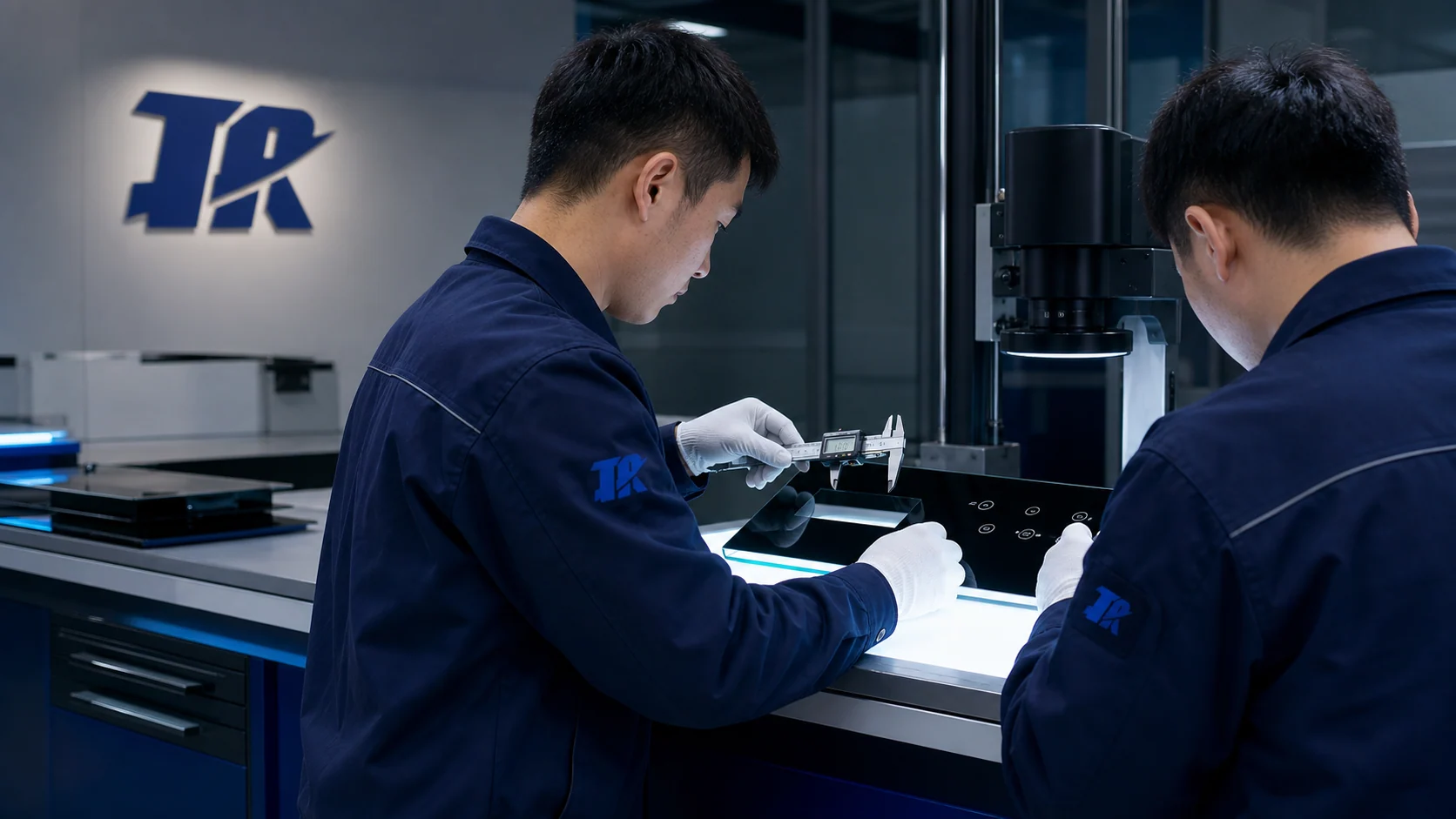
Verify substrate, thickness, treated side, coating lot and protective film. First-off inspection should confirm dimensions, print registration, optical values at defined points and appearance on the reference display.
In-process protection
Control gloves, racks, suction contact, washing water, drying, separator material and film lamination. Coating scratches and pressure marks may be difficult to see until display assembly.
Final inspection
Use controlled reflected and transmitted lighting. Inspect the powered sample when assembly risk warrants. Shipment inspection should confirm orientation labels, film condition, lot traceability and packaging that prevents coated surfaces from rubbing.
Supplier evaluation questions
- Which AG/AR process and treated-side configuration is proposed?
- What optical characteristics are measured in-house and by which methods?
- How are instruments calibrated and recipes controlled?
- How is the treatment protected through CNC, tempering and printing?
- What changes require customer notification?
- Can the supplier correlate coupon data with finished decorated glass?
- How are coating scratches, stains, color differences and pinholes classified?
- Can the supplier support assembly-level testing with the display partner?
A capable supplier should state limitations and propose validation, not promise one surface will be best for every appliance.
What to request in a supplier quotation
A technically useful quotation should separate the base-glass configuration, surface treatment, decorative printing, protective film, inspection and packaging rather than hiding them inside one undifferentiated price. Ask the supplier to identify the treated side, whether the treatment is performed before or after the proposed fabrication steps, and which process steps are completed in-house or by a controlled external source. This is especially important when coating, tempering and printing must follow a constrained sequence.
The quotation should list the optical characteristics that are included in routine control and those that require a development test or third-party measurement. It should also state the sample configuration: loose glass, decorated glass, bonded optical stack or powered appliance assembly. Results from a small coating coupon cannot automatically predict readability through printed windows, adhesive and the actual display.
For installation preparation, request orientation labels and handling instructions for the treated surface. Confirm which protective film is compatible with shipment and storage, and whether its removal can leave residue or electrostatic particles. Finally, define how recipe, coating source, substrate, film or cleaning-process changes will be notified. These details make quotations comparable and prevent an apparently low unit price from transferring qualification cost to the display assembler.
Cost and sourcing considerations
AR coatings normally add process complexity, yield risk and protection requirements. AG treatment can be more economical in some configurations but may need tight texture control to manage sparkle. Clear glass may be the lowest-risk answer when the display is bright, ambient reflection is manageable or the product uses a hooded interface.
Compare total system cost rather than price per glass piece. Include display brightness/power, bonding method, cleaning failures, coating scratches, protective films, inspection time and field readability. A more expensive glass treatment can reduce another system cost, while an unnecessary treatment can add risk without visible benefit.
Procurement checklist
Send the supplier:
- use environment and target markets;
- display model, brightness, resolution and polarizer information;
- drawing, artwork and glass orientation;
- desired AG/AR/clear variants;
- optical metrics and methods, if already defined;
- normal viewing distance and angles;
- approved cleaners and durability sequence;
- touch and bonding configuration;
- cosmetic zones and boundary samples;
- sample quantity and decision schedule.
Ask for a DFM response that separates confirmed capability, proposed targets and items requiring test. This keeps technical assumptions out of the quotation.
FAQ
Is anti-glare glass the same as anti-reflective glass?
No. AG primarily diffuses reflected light; AR primarily lowers reflection through thin-film interference. They produce different optical effects and trade-offs.
Which surface gives the sharpest display image?
Clear or well-designed AR glass often preserves more sharpness than a highly diffusing AG surface, but the complete display stack and ambient light determine perceived readability.
Does lower reflectance always mean better appliance glass?
No. Buyers must also consider residual color, angle dependence, coating durability, touch behavior, process compatibility, cost and dead-front appearance.
Can AG or AR be added after the panel design is complete?
Sometimes, but late addition can change color, transmission, bonding, print appearance and process sequence. Include the surface choice early and validate production-intent assemblies.
What is the safest way to select between AG and AR?
Compare controlled prototypes using the real display, artwork, adhesive, enclosure, lighting and cleaning tests. Approve measurable limits and physical references before mass production.
Conclusion
AG, AR and clear glass solve different problems. A strong specification starts with the user environment, builds an optical-stack budget, identifies measurable characteristics and validates the treated glass after printing, tempering, bonding and cleaning. The best surface is the one that delivers reliable readability and appearance in the finished appliance—not the option with the most impressive isolated datasheet number.
Request an optical surface comparison
Send your display, drawing, artwork and environment details through our contact page, or review our control-panel glass capabilities. Tairong can help structure clear, AG and AR sample comparisons without assuming unverified performance targets.