

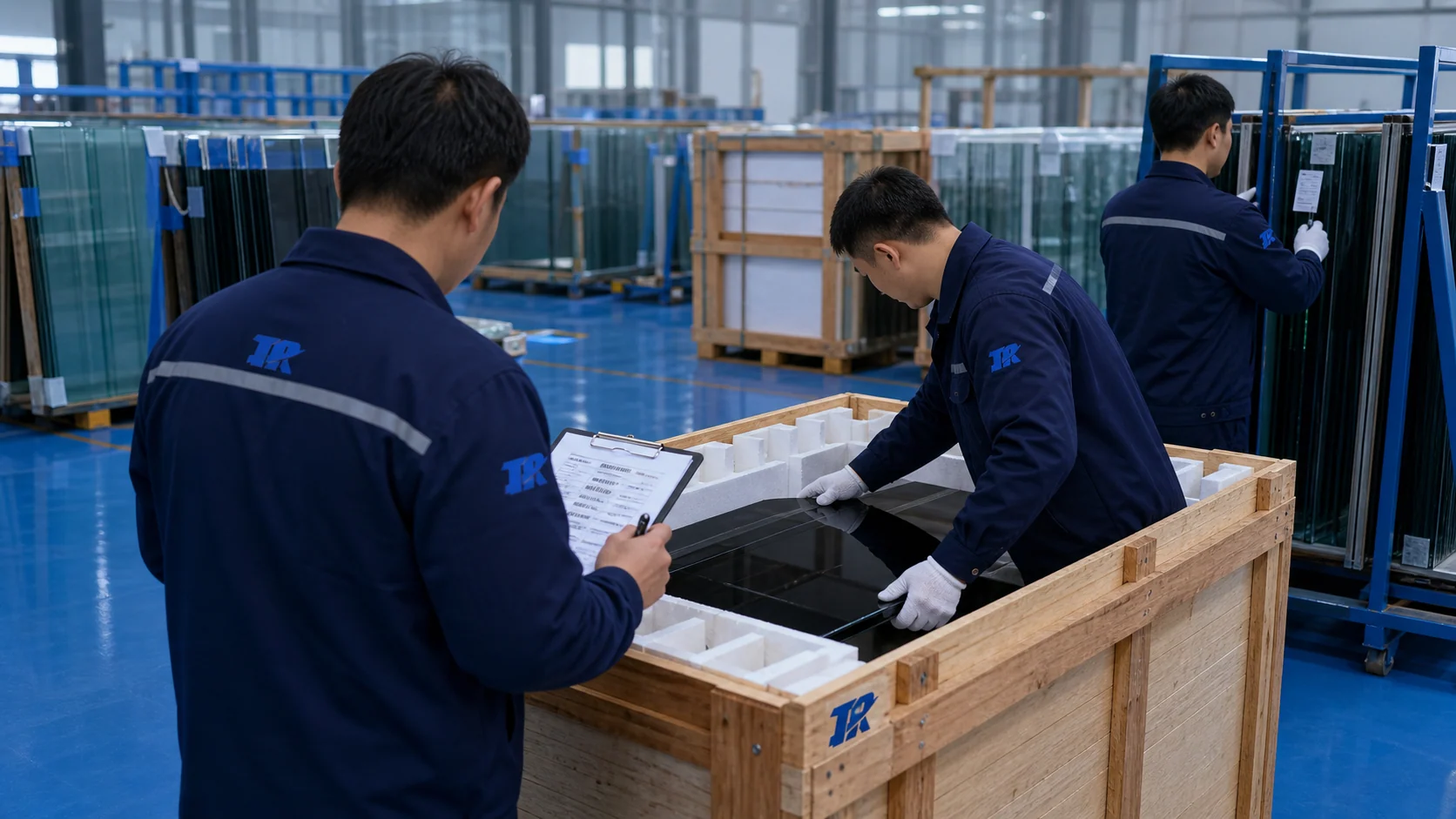
Direct answer: a glass rack or fixture is part of the quality system when it touches a finished panel. It must support the intended geometry without edge impact, surface rubbing, point load, contamination or loss of part identity.
Design around the actual part
Review the supported locations, tilt angle, separator material, contact pressure, clearance to holes and printed/coated surfaces, and how operators load and unload the part. A rack that works for unprinted glass may damage a dead-front panel, a coated window or a thin edge.
| Risk | Practical control |
|---|---|
| Edge chip | padded, stable supports away from vulnerable features |
| Surface scratch | clean compatible separators and no panel-to-panel contact |
| Mixed revision | labeled locations and controlled transfer status |
| Fixture stress | representative support and no forced twist |
Prove the route, then inspect it
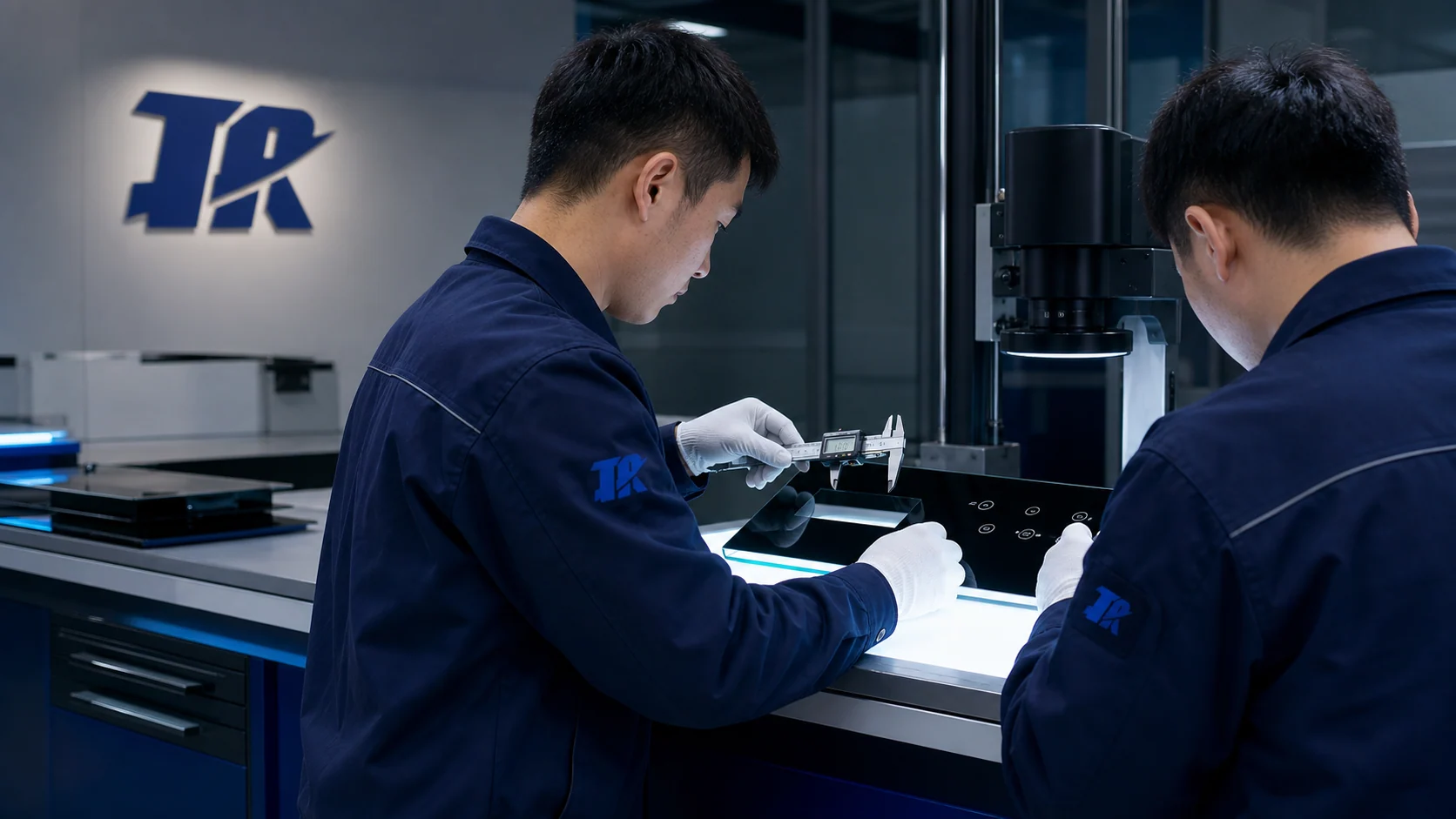
Run a handling trial through the real sequence: final inspection, temporary storage, packing, receiving and installation preparation. Compare the part before and after under agreed lighting. Record any film lift, rub mark, chip, print damage or contamination. Shipment inspection cannot correct damage created by an unsuitable internal rack.
For coated or bonding surfaces, make cleaning and allowed contact materials explicit. See edge-quality control and protective-film selection.
FAQ
Can foam always contact coated glass?
No. Compatibility, cleanliness, moisture behavior and pressure marks should be verified for the finished surface and expected storage time.
Is visual inspection enough after a handling trial?
Use visual inspection plus any relevant functional check, such as film condition, coating appearance or fit in the next fixture.
Conclusion
Treat each rack and fixture as an interface with the finished product. Defined support, clean separation, clear identity and a documented trial reduce avoidable damage after the glass has passed factory testing.
Ask Tairong for a handling review with your part drawing and next-process constraints.